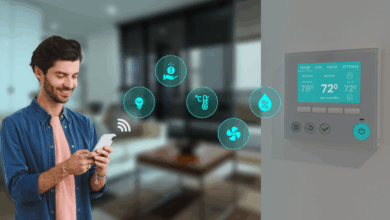
Voice Technology Transforms Digital Interaction Paradigms



The Sonic Revolution in Digital Engagement
Voice interface technology has emerged as a transformative force in how humans interact with digital systems, fundamentally reshaping online engagement from screen-based tapping to natural conversational exchanges. This paradigm shift represents more than merely an alternative input method—it signifies a fundamental rethinking of human-computer interaction that aligns technology with humanity’s most innate communication channel: speech. From smart speakers that have become household fixtures to voice-enabled applications that understand context and emotion, voice interfaces are creating more intuitive, accessible, and human-centric digital experiences. This comprehensive analysis explores how voice technology is redefining online engagement, the underlying technologies enabling this transformation, implementation across digital domains, and the profound implications for businesses, content creators, and users navigating this rapidly evolving sonic landscape.
A. The Technological Foundation of Modern Voice Interfaces
Sophisticated technologies converge to create seamless voice interaction experiences.
A.1. Advanced Speech Recognition and Processing
Modern voice systems demonstrate unprecedented accuracy in understanding human speech.
-
Neural Speech Recognition: Deep learning models that process audio signals with human-like accuracy, even in noisy environments or with diverse accents and speech patterns.
-
Contextual Language Understanding: Systems that interpret meaning based on conversational context, previous interactions, and situational awareness rather than just processing individual commands.
-
Real-Time Processing Capabilities: Technologies that enable instantaneous response with minimal latency, creating the illusion of natural conversation rather than computer processing.
A.2. Natural Language Generation and Synthesis
The output side of voice interfaces has achieved remarkable sophistication.
-
Emotional Speech Synthesis: Text-to-speech systems that convey emotion, emphasis, and personality through subtle variations in tone, pace, and inflection.
-
Dynamic Content Generation: Systems that create original spoken responses rather than simply retrieving pre-recorded audio, enabling more natural and contextual interactions.
-
Multilingual Voice Personas: Consistent voice personalities that maintain character across different languages and cultural contexts.
A.3. Personalization and Adaptive Learning
Voice systems increasingly tailor experiences to individual users.
-
Voice Biometrics: Systems that identify users through unique vocal characteristics, enabling personalized experiences without explicit login processes.
-
Conversational Pattern Learning: AI that adapts to individual communication styles, vocabulary preferences, and interaction patterns over time.
-
Contextual Memory: Systems that remember previous conversations and reference them appropriately in future interactions.
B. Voice Interface Implementation Across Digital Domains
Voice technology is transforming engagement across multiple digital contexts.
B.1. E-Commerce and Voice-Activated Shopping
Voice interfaces are creating new paradigms for commercial transactions.
-
Conversational Commerce: Natural language shopping experiences where users describe what they want rather than navigating categories and filters.
-
Voice-Based Product Discovery: Systems that help users find products through descriptive language rather than keyword searches.
-
Audio-First Customer Service: Voice interfaces that handle customer inquiries, troubleshooting, and support through natural dialogue rather than menu trees.
B.2. Content Consumption and Entertainment
Voice is changing how we access and experience digital content.
-
Audio-First Content Platforms: Services designed specifically for voice interaction rather than adapted from visual interfaces.
-
Interactive Audio Stories: Narrative experiences that respond to user voice input, creating choose-your-own-adventure style entertainment.
-
Voice-Controlled Media Ecosystems: Integrated systems that manage music, podcasts, audiobooks, and other media through natural language commands.
B.3. Productivity and Digital Assistance
Voice interfaces are transforming how we accomplish tasks and manage information.
-
Conversational Knowledge Management: Systems that allow users to query organizational knowledge bases through natural questions rather than formal searches.
-
Voice-Activated Workflows: Business processes that can be initiated, monitored, and controlled through voice commands.
-
Multimodal Task Management: Systems that combine voice input with other modalities to manage complex tasks and projects.

C. The User Experience Revolution in Voice Interfaces
Voice technology demands fundamentally different approaches to user experience design.
C.1. Conversation Design Principles
Creating effective voice interactions requires specialized design methodologies.
-
Dialogue Flow Architecture: Designing natural conversation patterns that handle interruptions, clarifications, and topic changes gracefully.
-
Personality and Tone Design: Crafting consistent voice personalities that build trust and engagement while aligning with brand identity.
-
Error Recovery Strategies: Designing graceful handling of misunderstandings, unrecognized commands, and other interaction failures.
C.2. Accessibility and Inclusive Design
Voice interfaces can dramatically expand digital access.
-
Screen-Free Digital Inclusion: Enabling digital access for users with visual impairments, mobility challenges, or low literacy.
-
Multilingual Accessibility: Systems that serve users in their native languages, including dialects and regional variations.
-
Age-Appropriate Interfaces: Voice experiences tailored to different age groups, from children to elderly users.
C.3. Privacy and Ethical Considerations
Voice interfaces raise unique concerns around data and consent.
-
Transparent Data Collection: Clearly communicating what data is being collected through voice interactions and how it will be used.
-
Voice Data Security: Protecting the unique biometric data contained in voice recordings from misuse or breach.
-
Consent Management: Ensuring users understand and control when voice recording is active and how recordings are stored and processed.
D. Business Transformation Through Voice Technology
Organizations are leveraging voice interfaces to create new value propositions and operational models.
D.1. Customer Engagement and Relationship Building
Voice enables more personal and continuous customer relationships.
-
24/7 Conversational Availability: Always-accessible brand interactions through voice assistants and chatbots.
-
Emotional Connection Development: Voice interfaces that build stronger emotional bonds through tone, empathy, and personalized interactions.
-
Proactive Relationship Management: Systems that initiate conversations based on user behavior, context, or needs rather than waiting for user initiation.
D.2. Operational Efficiency and Automation
Voice interfaces are streamlining business processes and reducing friction.
-
Hands-Free Operation: Enabling task completion in contexts where manual interaction is impractical or unsafe.
-
Voice-Enabled Workflow Automation: Complex business processes that can be controlled and monitored through voice commands.
-
Reduced Training Requirements: Intuitive voice interfaces that require minimal instruction compared to complex visual interfaces.
D.3. New Revenue Models and Business Opportunities
Voice technology is creating entirely new business possibilities.
-
Voice-Based Subscription Services: Content and services designed specifically for voice interaction and consumption.
-
Voice Commerce Ecosystems: Complete purchasing experiences conducted entirely through voice.
-
Voice Application Marketplaces: Platforms for distributing and monetizing voice skills and actions.
E. Implementation Challenges and Strategic Considerations
Despite rapid advancement, voice interface implementation presents significant challenges.
E.1. Technical Implementation Hurdles
Building effective voice systems requires overcoming complex technical obstacles.
-
Background Noise Handling: Maintaining accuracy in real-world environments with multiple sound sources and variable acoustics.
-
Accent and Dialect Diversity: Ensuring consistent performance across diverse speech patterns, accents, and regional variations.
-
Integration Complexity: Connecting voice systems with existing databases, APIs, and business logic.
E.2. User Adoption and Behavior Change
Encouraging users to embrace voice interfaces requires understanding behavioral dynamics.
-
Social Acceptance Barriers: Overcoming reluctance to speak to devices in public or shared environments.
-
Learning Curve Management: Helping users discover capabilities and develop effective interaction patterns.
-
Trust Building: Establishing user confidence in voice systems’ reliability, privacy, and security.
E.3. Measurement and Optimization
Evaluating and improving voice experiences requires new metrics and methodologies.
-
Conversation Success Metrics: Moving beyond traditional analytics to measure conversation quality, completion rates, and user satisfaction.
-
Voice-Specific UX Research: Specialized methods for testing and optimizing voice interfaces.
-
Continuous Learning Systems: Architectures that enable voice interfaces to improve based on user interactions.

F. Future Directions in Voice Interface Evolution
Voice technology continues to evolve with emerging capabilities and applications.
F.1. Advanced Natural Language Capabilities
Future voice systems will demonstrate even more human-like understanding and generation.
-
Emotional Intelligence: Systems that detect and respond appropriately to user emotional states through vocal cues.
-
Complex Reasoning: Voice interfaces that can handle multi-step reasoning, abstraction, and nuanced interpretation.
-
Creative Collaboration: AI voice partners that contribute creatively to brainstorming, problem-solving, and content creation.
F.2. Multimodal Integration
Voice will increasingly combine with other interaction modalities.
-
Voice and Visual Combination: Systems that use voice input and visual output in complementary ways.
-
Gesture and Voice Integration: Interfaces that combine voice commands with physical gestures.
-
Ambient Interface Environments: Spaces where voice interaction blends seamlessly with other sensory inputs and outputs.
F.3. Specialized Domain Applications
Voice technology will penetrate increasingly specialized domains.
-
Professional Voice Tools: Domain-specific voice interfaces for healthcare, engineering, scientific research, and other specialized fields.
-
Educational Voice Applications: Voice-based learning systems that adapt to individual learning styles and knowledge levels.
-
Therapeutic Voice Interfaces: Voice systems for mental health support, cognitive therapy, and wellness coaching.
Conclusion: The Voice-First Digital Future
The rise of voice interfaces represents a fundamental shift toward more natural, intuitive, and human-centric digital interactions. This transition from graphical user interfaces to conversational interfaces marks a significant milestone in the ongoing evolution of human-computer interaction—moving digital technology closer to human communication patterns rather than requiring humans to adapt to machine logic. The most successful organizations in this voice-first future will be those that understand voice not as simply another channel, but as a fundamentally different paradigm that requires rethinking content strategies, user experience design, and business models. As voice technology continues to advance and become increasingly woven into the fabric of daily life, it promises to make digital technology more accessible, efficient, and integrated into human activity. However, realizing this potential will require thoughtful attention to privacy, inclusivity, and the preservation of human connection in an increasingly automated world. The voice revolution is not just changing how we interact with technology—it’s reshaping our relationship with digital systems and, ultimately, with each other.
Tags: voice technology, voice interfaces, digital interaction, conversational AI, speech recognition, voice assistants, user experience, human-computer interaction, voice commerce, natural language processing, digital transformation, voice-first design