Augmented Reality Transforms Daily Human Interactions


The Seamless Integration of Digital and Physical Worlds
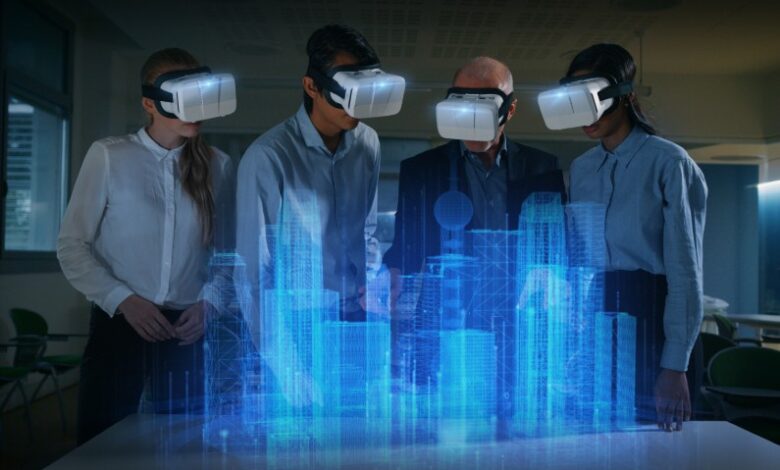
Augmented reality has evolved from a niche technology into a transformative force that is fundamentally reshaping how humans perceive, interact with, and navigate their daily environments. This technological paradigm, which seamlessly overlays digital information onto our physical reality, is moving beyond gaming and entertainment to reinvent essential human experiences across education, commerce, healthcare, and social interaction. Unlike virtual reality, which creates entirely synthetic environments, augmented reality enhances rather than replaces our physical world, creating hybrid experiences that combine the richness of digital information with the tangibility of physical reality. This comprehensive analysis explores how augmented reality is reinventing everyday experiences, the technological advances driving this transformation, implementation across diverse life domains, and the profound implications for how we will work, learn, shop, and connect in an increasingly digitally-enhanced world.
A. The Technological Foundation of Modern Augmented Reality
Contemporary AR systems integrate multiple advanced technologies to create seamless digital-physical experiences.
A.1. Advanced Display and Visualization Technologies
The hardware that makes digital overlays possible has achieved unprecedented sophistication.
-
Spatial Computing Platforms: Systems that understand and interact with the physical environment, enabling digital content to behave as if it exists in real space rather than simply floating in front of the user.
-
Waveguide and Holographic Displays: Advanced optical systems that project high-resolution digital imagery directly into the user’s field of view while maintaining visibility of the physical environment.
-
Light Field Technology: Systems that replicate how light interacts with physical objects, enabling digital content to appear with realistic lighting, shadows, and occlusion that matches the physical environment.
A.2. Environmental Understanding and Tracking Systems
AR systems must comprehensively understand the physical world to integrate digital content convincingly.
-
Simultaneous Localization and Mapping: Real-time creation of 3D maps of the environment while tracking the user’s position within those maps, enabling persistent digital content that remains in place as users move.
-
Semantic Understanding: Advanced computer vision that recognizes and classifies objects in the environment, understanding that a flat surface is a “table” rather than just a geometric plane.
-
Depth Sensing and Spatial Awareness: Technologies like LiDAR and structured light that accurately measure distances and create detailed 3D models of the environment in real-time.
A.3. Content Creation and Interaction Paradigms
New tools and interfaces are making AR content creation more accessible and interaction more intuitive.
-
Volumetric Content Creation: Tools for creating 3D digital assets that exist in space rather than on flat screens, enabling more natural integration with physical environments.
-
Gesture and Gaze-Based Interaction: Control systems that use natural hand movements and eye tracking rather than traditional controllers or touchscreens.
-
Multi-User Shared Experiences: Systems that enable multiple people to see and interact with the same digital content in a shared physical space, creating collaborative AR environments.
B. Transformation of Daily Activities Through Augmented Reality
AR is fundamentally changing how people approach routine tasks and activities.
B.1. Retail and Commerce Revolution
The shopping experience is being transformed from passive viewing to interactive exploration.
-
Virtual Try-On Experiences: Customers can see how clothing, accessories, or makeup will look on themselves without physical changing rooms or samples.
-
Spatial Product Visualization: The ability to see how furniture, appliances, or decor will look and fit in one’s actual living space before purchase.
-
Interactive Product Information: Simply pointing a device at a product to access reviews, specifications, and alternative options without searching or scanning barcodes.
B.2. Education and Skill Development Enhancement
Learning is becoming more immersive, interactive, and contextually relevant.
-
Interactive Educational Materials: Textbooks and learning resources that come to life with 3D models, animations, and supplementary information when viewed through AR devices.
-
Procedural Training: Step-by-step visual guidance overlaid directly on equipment or workspaces for learning complex procedures from medical techniques to equipment repair.
-
Historical and Cultural Exploration: Visiting historical sites or museums and seeing reconstructions of ancient structures or contextual information about artifacts.
B.3. Navigation and Wayfinding Transformation
Moving through physical spaces is becoming more intuitive and information-rich.
-
Indoor Navigation Systems: Visual guidance through complex buildings like airports, hospitals, or shopping malls without confusing signs or maps.
-
Contextual Location Information: Simply looking at a building or landmark to access information about its history, current occupants, or available services.
-
Public Transportation Integration: Real-time information about bus and train schedules, routes, and delays overlaid directly at stops and stations.

C. Industry-Specific AR Implementations
Augmented reality is delivering significant value across specialized professional domains.
C.1. Healthcare and Medical Applications
AR is enhancing both medical practice and patient care.
-
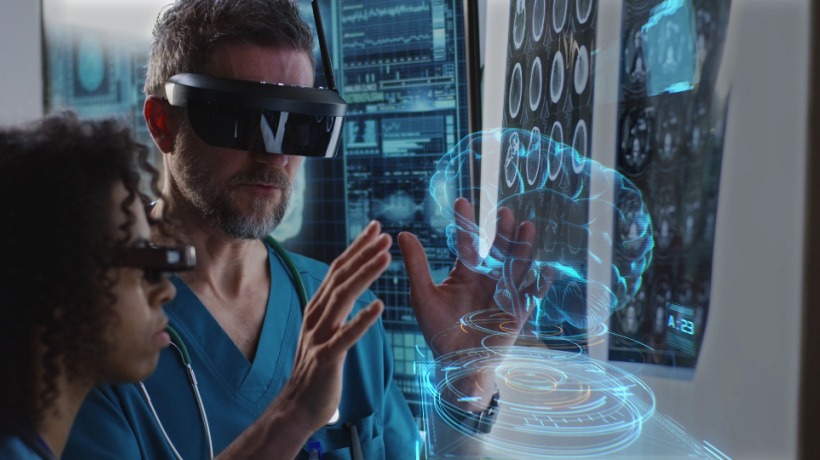
Surgical Navigation and Visualization: Overlaying critical information like tumor locations, blood vessels, or surgical plans directly onto the patient’s body during procedures.
-
Medical Training and Education: Interactive 3D models of anatomy that medical students can examine from all angles and dissect virtually.
-
Patient Education and Rehabilitation: Visual explanations of medical conditions and treatments, plus guided physical therapy with real-time form correction.
C.2. Manufacturing and Field Service
AR is improving efficiency, accuracy, and safety in industrial settings.
-
Assembly and Maintenance Guidance: Step-by-step instructions overlaid directly on equipment, reducing errors and training time while improving productivity.
-
Remote Expert Assistance: Field technicians receiving real-time visual guidance from remote experts who can annotate their view of the situation.
-
Quality Control and Inspection: Visual highlights of potential issues or deviations from specifications during manufacturing or inspection processes.
C.3. Architecture and Construction
Design and building processes are becoming more collaborative and precise.
-
Design Visualization and Modification: Architects and clients can see and modify building designs overlaid on the actual construction site.
-
Construction Verification: Comparing as-built structures with original designs to identify discrepancies before they become costly problems.
-
Utilities and Infrastructure Visualization: Seeing underground pipes, cables, and other infrastructure before digging or drilling.
D. Social and Behavioral Implications
The widespread adoption of AR is reshaping human interaction and perception.
D.1. Changing Social Dynamics
AR is creating new forms of social interaction and community.
-
Enhanced Social Gatherings: Shared AR experiences that blend digital entertainment with physical social spaces.
-
New Forms of Self-Expression: Digital accessories, filters, and enhancements that become part of personal presentation in physical spaces.
-
Location-Based Social Networks: Connecting with people who share interests based on physical location and contextual information.
D.2. Cognitive and Psychological Effects
Constant information overlay may change how we think and remember.
-
Reduced Cognitive Load: Offloading memory and navigation tasks to AR systems may free mental resources for more complex thinking.
-
Attention and Focus Challenges: The constant availability of digital information may make sustained attention to physical tasks more difficult.
-
Spatial Memory Alteration: Relying on AR for navigation may change how we develop and use mental maps of physical spaces.
D.3. Privacy and Ethical Considerations
AR raises complex questions about information, surveillance, and reality.
-
Personal Information Disclosure: The potential for AR systems to inadvertently reveal information about users and their environments.
-
Reality Modification and Consent: Ethical questions about modifying how others perceive reality without their knowledge or consent.
-
Digital Property and Physical Space: Questions about who controls the digital layer over physical spaces and how digital and property rights intersect.
E. Implementation Challenges and Limitations
Despite rapid advancement, significant barriers remain to universal AR adoption.
E.1. Technical and Hardware Limitations
Current AR technology still faces practical constraints.
-
Battery Life and Power Management: The significant energy demands of AR processing and display limit usage duration, particularly for mobile applications.
-
Field of View and Display Quality: Most consumer AR devices still have limited field of view and resolution compared to human vision.
-
Form Factor and Social Acceptance: Many AR systems remain bulky or unusual-looking, limiting widespread adoption in social situations.
E.2. Content Creation and Ecosystem Development
Building the AR ecosystem requires new skills and infrastructure.
-
Content Production Complexity: Creating high-quality AR experiences requires specialized skills in 3D modeling, spatial design, and interactive storytelling.
-
Standards and Interoperability: The lack of universal standards makes it difficult for AR experiences to work consistently across different devices and platforms.
-
Discovery and Distribution: How users find, access, and share AR experiences remains fragmented compared to traditional digital content.
E.3. Accessibility and Digital Divide Considerations
Ensuring AR benefits are widely distributed presents challenges.
-
Cost and Economic Accessibility: High-quality AR systems remain expensive, potentially creating a new digital divide between those who can and cannot afford access.
-
Physical and Cognitive Accessibility: Designing AR experiences that are usable by people with different physical abilities and cognitive styles.
-
Cultural and Contextual Appropriateness: Ensuring AR content respects cultural differences and local contexts.
F. Future Directions and Emerging Possibilities
AR technology continues to evolve with increasingly sophisticated capabilities on the horizon.
F.1. Advanced Display and Interaction Technologies
Future AR systems will become more immersive and intuitive.
-
Contact Lens and Retinal Displays: AR visualization that moves from headsets to minimally intrusive forms like smart contact lenses.
-
Haptic and Multi-Sensory Feedback: Systems that provide tactile and other sensory feedback to make digital content feel more physically present.
-
Brain-Computer Interfaces: Eventually controlling AR systems through thought and neural signals rather than physical interaction.
F.2. AI Integration and Contextual Intelligence
AR systems will become more predictive and proactive.
-
Anticipatory Information Display: Systems that predict what information users need based on context, behavior patterns, and current activity.
-
Personalized Reality Filtering: Customized views of the world that highlight relevant information while minimizing distractions.
-
Ambient Intelligence Environments: Spaces where AR works seamlessly with other smart technologies to create holistic enhanced environments.
F.3. Social and Economic Transformation
As AR becomes ubiquitous, it will reshape broader societal structures.
-
New Economic Models: Businesses built around AR-enhanced experiences, digital goods in physical spaces, and spatial advertising.
-
Transformed Work Environments: Remote work that feels co-present through realistic avatars and shared virtual workspaces overlaid on physical environments.
-
Reimagined Urban Spaces: Cities designed with integrated digital layers as fundamental components rather than afterthoughts.
Conclusion: The Augmented Human Experience
Augmented reality represents a fundamental shift in the relationship between humans, technology, and physical reality. Unlike previous computing paradigms that required our attention to be directed toward screens and devices, AR interweaves digital information seamlessly into our perception of the world around us. This transition from device-centric to environment-centric computing has profound implications for how we learn, work, socialize, and navigate our daily lives. The most successful AR implementations demonstrate that the technology’s greatest value lies not in flashy visual effects but in subtle enhancements that make us more capable, informed, and connected within our physical environments. As AR technology continues to mature and become more integrated into our daily experiences, it promises to redefine human capability itself—extending our memory with contextual information, enhancing our perception with additional data layers, and connecting us more richly with both people and places. In this context, the ultimate success of augmented reality will be measured not by its technological sophistication but by how meaningfully it enhances human experience while preserving the richness, spontaneity, and authenticity of unmediated reality.
Tags: augmented reality, AR technology, digital transformation, mixed reality, spatial computing, immersive technology, human-computer interaction, AR applications, future technology, digital experiences, reality enhancement, interactive technology